Toyota DIY Go-Bag — Ranked by How Often You'll Need It
The One Kit Between You and a Very Long Walk
You’re parked at a trailhead forty minutes from pavement. No cell signal. The TPMS light was on for the last three miles of dirt road, and now the tire is visibly low.
This is not a hypothetical. If you drive a Toyota to trails, fire roads, or anywhere past the last cell tower, your car is part of your gear. Roadside assistance averages 55 minutes on highways — on forest service roads, it’s hours. If they can even find you.
Every item below is ranked by how often you’ll actually need it, not alphabetically, not by category. The stuff at the top is what you’ll reach for most. The stuff at the bottom might save your life once.

The Reference
DIY Maintenance Tasks — Ranked by Annual Probability
| Rank | Task | Annual Prob. | Difficulty | Reality Check | Toyota Notes |
|---|---|---|---|---|---|
| 1 | Check/top off wiper fluid | ~100% | ★☆☆ | Easiest task — 30 sec | Same reservoir location across all 3 models |
| 2 | Replace wiper blades | ~100% | ★☆☆ | Feels harder than it is — 2 min per blade | Camry/Highlander: standard J-hook; some Prius: pin-type arm |
| 3 | Replace cabin air filter | ~100% | ★☆☆ | Glove box pop — 2 minutes, no tools | Behind glove box on all 3 models; buy 2-packs |
| 4 | Replace engine air filter | ~100% | ★☆☆ | Looks intimidating, takes 2 min | Unclip airbox lid — metric-only; no screwdriver needed on most years |
| 5 | Check tire pressure / inflate | ~90% | ★☆☆ | Most wait for TPMS — should be monthly | All 3 models: 32–35 PSI; check door jamb sticker |
| 6 | Rotate tires | ~75% | ★★☆ | Simple but 30 min with floor jack | Prius: front-heavy wear from regen braking; rotate at 5K |
| 7 | Check/top off engine oil | ~70% | ★☆☆ | Pull dipstick, wipe, re-check | 2007–2011 Camry 2.4L: known oil consumption — check more often |
| 8 | Change engine oil + filter | ~65% | ★★☆ | Most common “first real DIY” — 20 min | 0W-20 full synthetic; 14mm drain plug; Prius holds only 3.7 qt |
| 9 | Inspect brake pads (visual) | ~60% | ★★☆ | Look through wheel spokes — no removal | Rear pads last longer on Prius (regen braking) |
| 10 | Replace 12V battery | ~50% | ★★☆ | 10mm bolt, 15 min | Prius: 12V is in trunk, NOT under hood |
| 11 | Replace headlight/taillight bulbs | ~30% | ★★☆ | Varies by year | 2012+ Camry: LED DRL = dealer; halogen models: 10 min |
| 12 | Check/top off coolant | ~25% | ★☆☆ | Cold engine only | Prius/Highlander Hybrid: TWO coolant loops |
| 13 | Replace spark plugs | ~15% | ★★★ | Iridium plugs last 120K; needs torque wrench | V6 Highlander rear bank: knuckle-buster |
| 14 | Flush brake fluid | ~10% | ★★★ | Needs helper or one-person bleeder kit | Prius: NOT manually bleedable — needs bidirectional scanner |
| 15 | Replace serpentine belt | ~8% | ★★☆ | Draw routing diagram BEFORE removal | Prius: no serpentine belt (electric accessories) |

In-Car Tool Kit — Ranked by Probability of Roadside Use
| Rank | Item | Use Prob. | Why It’s There | Toyota Notes |
|---|---|---|---|---|
| 1 | Tire pressure gauge (digital) | ~90% | TPMS warns below threshold — not accurate for target PSI | All 3 models: 32–35 PSI door jamb spec |
| 2 | Portable tire inflator (12V) | ~80% | Slow leaks, post-gravel-road reinflation | Plugs into 12V outlet; no gas station needed |
| 3 | Flashlight (LED, rechargeable) | ~75% | Every roadside fix is worse after dark | USB-C rechargeable; check charge quarterly |
| 4 | 10mm socket + ratchet | ~70% | The single most used fastener on all Toyotas | Buy 3 — you WILL lose them |
| 5 | Jumper cables / lithium jump starter | ~50% | Dead 12V = AAA’s #1 call (23% of breakdowns) | Prius 12V in trunk — need long cables or portable starter |
| 6 | Lug wrench (cross-type) | ~45% | OEM lug wrench is weak; cross-type adds leverage | All 3 models: 21mm lug nuts (metric only) |
| 7 | Scissor jack or compact floor jack | ~40% | OEM jack works but unstable on soft ground | Know your jack point locations — different per model |
| 8 | Multi-bit screwdriver | ~35% | Battery terminals, interior panels, misc | One multi-tool covers it |
| 9 | Adjustable wrench (8“) | ~30% | Battery terminals, hose clamps | Metric combo wrench set is better but heavier |
| 10 | Nitrile gloves (box of 10) | ~30% | Oil, coolant, brake dust | Doubles as first aid barrier |
| 11 | Tow strap (rated 10K+ lbs) | ~15% | Getting pulled from mud/snow — can’t tow with rope | Highlander: rear tow hooks; Prius/Camry: frame-mount only |
| 12 | LED road flares (3-pack) | ~10% | Chemical flares burn 5,000°F; LED = reusable + safer | Reusable, magnetic mount, visible 1+ mile |
Garage Tool Kit — Ranked by Probability of Home Use
| Rank | Item | Use Prob. | Primary Tasks | Notes |
|---|---|---|---|---|
| 1 | Shop towels / microfiber rags (bulk) | ~100% | Everything | Don’t use paper towels on brake rotors (lint residue) |
| 2 | Metric socket set (3/8“ drive, 8–21mm) | ~95% | Oil changes, battery, brakes, spark plugs | Toyota is 100% metric post-1980s — zero SAE needed |
| 3 | Torque wrench (3/8“ drive, 10–150 ft-lb) | ~90% | Lug nuts, drain plug, spark plugs | Over-torquing drain plugs = stripped oil pan |
| 4 | Floor jack (2–3 ton, low-profile) | ~85% | Tire rotation, brake inspection, underbody | Low-profile needed for Prius (5.3“ ground clearance) |
| 5 | Jack stands (pair, 3-ton rated) | ~85% | Any task under the car | NEVER use jack alone — non-negotiable |
| 6 | Oil drain pan (5+ quart) | ~65% | Oil changes | Prius: 3.7 qt; Camry 4-cyl: 4.6 qt; Highlander V6: 6.4 qt |
| 7 | Oil filter wrench (cup-type, 64mm) | ~65% | Oil filter removal | Toyota-specific 64mm 14-flute = perfect fit every time |
| 8 | Funnel (long-neck, flexible) | ~65% | Oil, coolant, wiper fluid, brake fluid | Flexible neck for tight engine bays |
| 9 | OBD-II scanner (Bluetooth or bidirectional) | ~50% | Check engine light, code reading, resets | Basic: ~$20; Bidirectional (Prius brake bleed): $150+ |
| 10 | Metric combination wrench set (8–19mm) | ~45% | Tight spaces where sockets can’t reach | 10mm, 12mm, 14mm used most |
| 11 | Wheel chocks (pair) | ~40% | Any jacking operation | Rubber > plastic; place on opposite end from jack |
| 12 | Multimeter (basic digital) | ~30% | Battery voltage, parasitic drain | 12.6V = full; below 12.2V = needs charging |
| 13 | Breaker bar (1/2“ drive, 18“) | ~25% | Stuck lug nuts, seized drain plugs | When the ratchet says no, the breaker bar says yes |
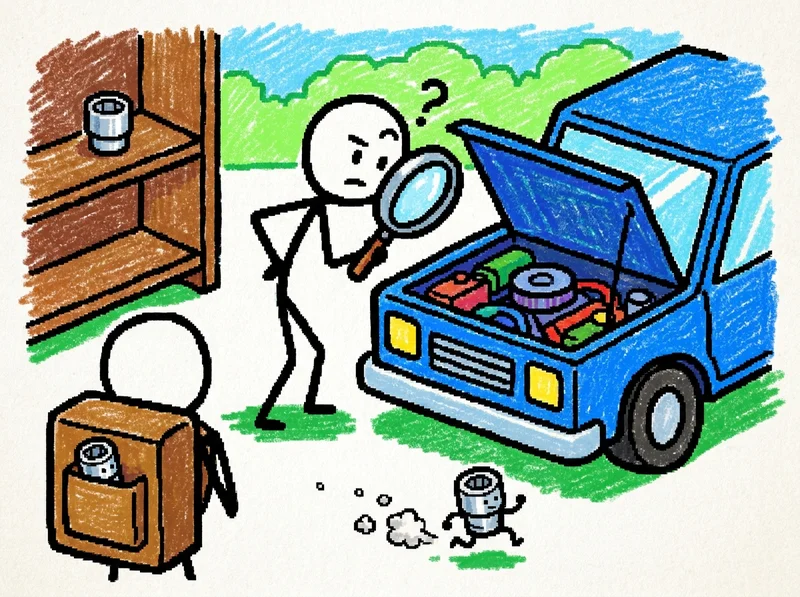
| 14 | Magnetic parts tray | ~20% | Keeping bolts organized during jobs | Prevents the “where did that 10mm go” problem |
| 15 | Fire extinguisher (ABC-rated, 2.5 lb) | ~1% use | Battery fire, fuel leak, electrical short | ~100% importance; check gauge annually |
Emergency & First Aid Kit — Ranked by Injury Probability
Sources: BLS occupational injury data, OSHA DIY mechanics reports, NHTSA roadside incident data
| Rank | Item | Injury Prob. | Injury Type | Why This Item First |
|---|---|---|---|---|
| 1 | Adhesive bandages (assorted) | ~25% | Cuts, scrapes, skin tears | Most common DIY injury — sharp edges, sheet metal |
| 2 | Sterile gauze pads (4×4) + tape | ~20% | Lacerations | When a bandage isn’t enough — knuckle gashes in tight spaces |
| 3 | Antiseptic wipes / spray | ~20% | Infection prevention | Dirty hands + open cut = infection; clean before dressing |
| 4 | Nitrile gloves (2 pairs) | ~15% | Chemical contact | Brake fluid damages skin on contact |
| 5 | Instant cold packs (×2) | ~12% | Bruises, bumps | The classic wrench-slip bruise |
| 6 | Elastic bandage / ACE wrap | ~10% | Sprains, strains | Awkward positions under cars; overextension |
| 7 | Pain relievers (ibuprofen + acetaminophen) | ~10% | Pain management | Ibuprofen for swelling; acetaminophen for general pain |
| 8 | Eye wash solution (4 oz) | ~8% | Rust, brake dust, fluid splash | Most common eye contaminants in car work |
| 9 | Burn gel packets (×4) | ~5% | Exhaust manifold, coolant burns | The #1 “touch-and-learn” injury for new DIYers |
| 10 | Tweezers (stainless steel) | ~5% | Metal splinters | Rusted components, especially undercarriage |
| 11 | Scissors (medical, blunt-tip) | ~5% | Cutting tape, gauze, clothing | Blunt-tip prevents accidental injury near wounds |
| 12 | Emergency mylar blanket | ~3% | Shock, hypothermia | Weighs 2 oz, fits in palm — no excuse not to carry one |
| 13 | CPR mask / face shield | <1% | Cardiac emergency | Low probability, highest stakes |
| 14 | Tourniquet (CAT-style) | <1% | Catastrophic bleeding | Train before you need it |

Toyota Model-Year Quirks
| Model | Years | Known Issue | Impact on Kit |
|---|---|---|---|
| Camry 2.4L | 2007–2011 | Oil consumption (up to 1 qt/1,200 mi) | Carry spare quart in car kit |
| Prius Gen 2–3 | 2004–2015 | 12V battery in trunk (not under hood) | Need long jumper cables or portable starter |
| Prius (all) | 2001–2023 | No serpentine belt | Skip belt from garage checklist |
| Prius (all) | 2001–2023 | Brake actuator NOT manually bleedable | Bidirectional OBD-II scanner required ($150+) |
| Prius / Highlander Hybrid | All years | Dual coolant loops (engine + inverter) | Two drain/fill procedures; inverter coolant often forgotten |
| Highlander V6 | 2008–2019 | Rear spark plugs hard to access | Budget extra time; flexible socket extension helps |
| Camry / Highlander | 2018+ | LED DRL on many trims | Module replacement = dealer; keep spares for signal bulbs only |
| All models | 2012+ | 0W-20 synthetic specified | 10K intervals per Toyota; forums debate 5K for older engines |
Why This Matters
A dead battery in your driveway is an inconvenience. A dead battery at a trailhead in the Catskills with no cell signal is a survival situation. I’ve watched a Prius owner stare at jumper cables attached to an empty engine bay — not knowing the 12V battery is in the trunk — while daylight disappeared.
The difference between a 15-minute fix and a 4-hour rescue hike is whether you packed the right 6 items and knew which 10mm bolt to turn. Every table above is ordered so you build the kit top-down: buy the first 5 items in each table, and you’re covered for 80% of what actually happens.
Personal Tip
I’ve owned three Toyotas across all three models. The single best addition to my car kit wasn’t a tool — it was buying three extra 10mm sockets. They vanish into engine bays like coins into couch cushions. One lives in the car kit, one in the garage, one in a pocket of my hiking pack. The second best was a lithium jump starter the size of a phone. It’s been used more often to help other people at trailheads than for my own car — and every time, zero signal, zero tow trucks, zero options except the kit in the trunk.
The Focalia Letter
One idea you can use. About seven minutes. Twice a month.
Read next

Firewall Log Pipeline With Cursor
Build a local firewall log pipeline on Windows with NXLog and SQLite, then let Cursor query it read-only — no SIEM required.
Read more →
AI Coding Agent Guardrails Beat Smarter Models
Your agent isn't forgetful because it's dumb. It's forgetful because you gave it nowhere to put things down. Five AI coding agent guardrails that fixed it.
Read more →
Reset Windows Update: The Definitive MSP Guide to RWU
The most-downloaded Windows Update reset tool was archived. RWU picks up where it left off with safe defaults, RMM exit codes, and AI-ready diagnostics.
Read more →